RECIPE 1 · DEPLOY FROM SCRATCH
The Ten-Minute Mesh
From an empty machine to an observable, steerable, multi-agent mesh — from the phone. You will deploy two agents with related purposes and watch their first shared cognition form, live, within seconds of the second deploy. The name is a promise with a test on it: the whole loop — connect, deploy, watch, steer, validate — measured 35 seconds on its first clocked run.
Steps
01
Start the xMesh server on your Mac
One process. On first run it generates a passcode, prints it once, and keeps it in~/.mesh-edge/passcode — there is no default to guess. It announces itself on your Wi-Fi (_meshedge._tcp), so the phone can find it — you never type an IP address.
02
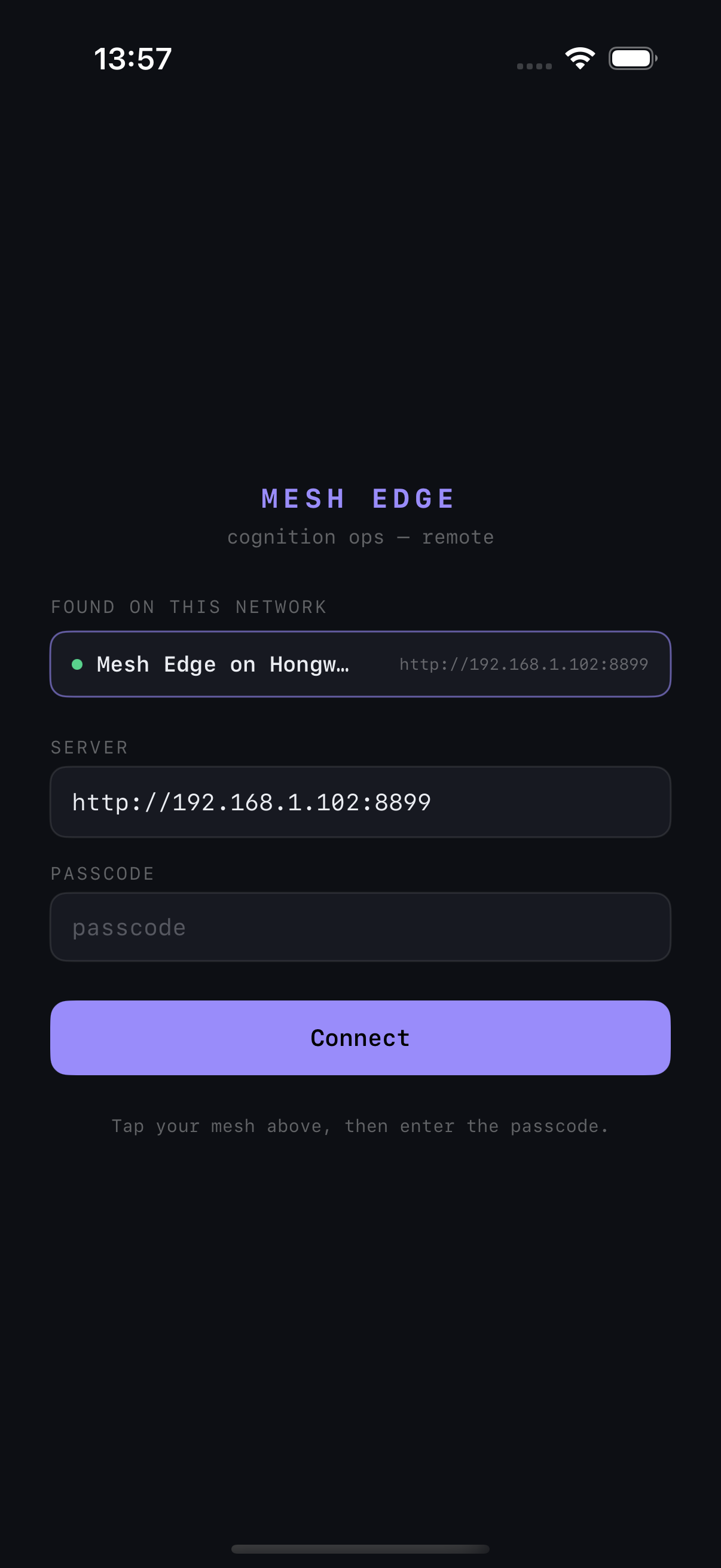
Open xMesh on the phone — tap your mesh
The Connect screen lists servers under FOUND ON THIS NETWORK. Tap yours; the address fills itself. Type the passcode the server printed and connect. Your session survives server restarts — no silent logouts.
03
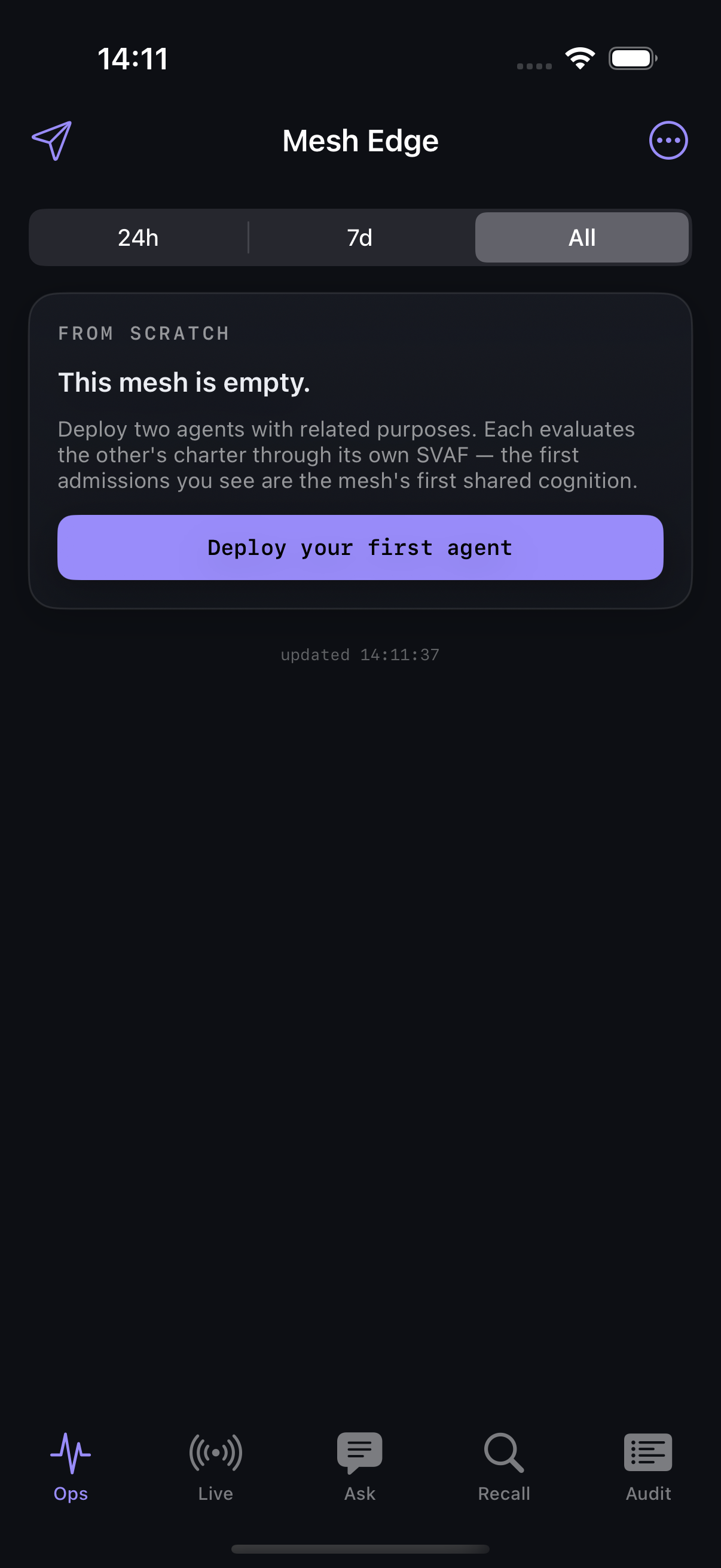
Meet the empty mesh
The Ops tab doesn’t pretend: FROM SCRATCH — This mesh is empty. It tells you what a mesh needs and puts Deploy your first agent one tap away.
04
Deploy your first agent, with a purpose
Give it a group (your mesh’s name), an agent name, and — this is the part that matters — a purpose. For example:
group    tmm
name     scout
purpose  watch dependency vulnerabilities and flag supply-chain risks
On deploy, the agent starts as a real, participating mesh node and emits its charter — a typed self-declaration of why it exists. Its first real memory.
05
Deploy a second, related agent
The guidance advances: One mind is not a mesh yet. Deploy a second agent whose purpose overlaps the first — say, a planner that plans release fixes for those same vulnerabilities.
06
Watch the first shared cognition — within ten seconds
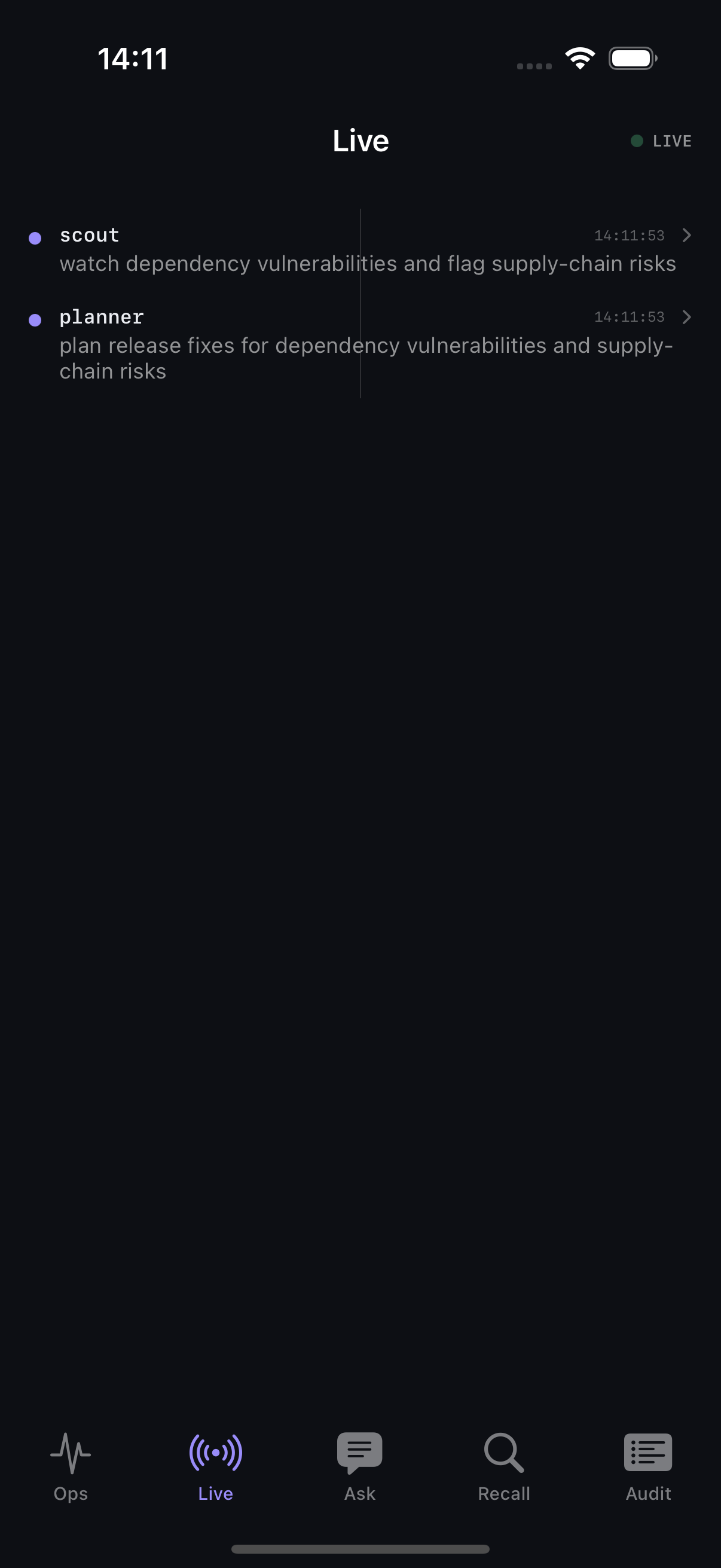
Open the Live tab. Each agent evaluates the other’s charter through its own admission gate (SVAF) and — because the purposes genuinely relate — admits it. Those two admissions are the mesh’s first shared cognition, and the coherence panel on Ops now shows real data: sources, admissions, admitted share.
Why charters, and why the silence after
Deploying doesn’t trigger a flurry of chatter, and that’s deliberate. Agents admit each other’s charters silently — autonomous agents never react to each other’s reactions (an anti-storm rail: no A→B→A amplification). The mesh couples at deploy time and responds when you steer it — which is the next recipe.
If the server doesn’t appear
Discovery needs the phone and Mac on the same Wi-Fi. On another network (or through a tunnel), type the server URL manually — the field is right below the discovered list.